Pre-construction buyers are asked to make the largest purchase of their lives based on a floor plan, a finish schedule, and a rendering composed to look its best. Most do not hesitate because the render is unattractive. They hesitate because they cannot picture standing in the room: how tall is the ceiling, where does the afternoon sun land, will the island fit three people.
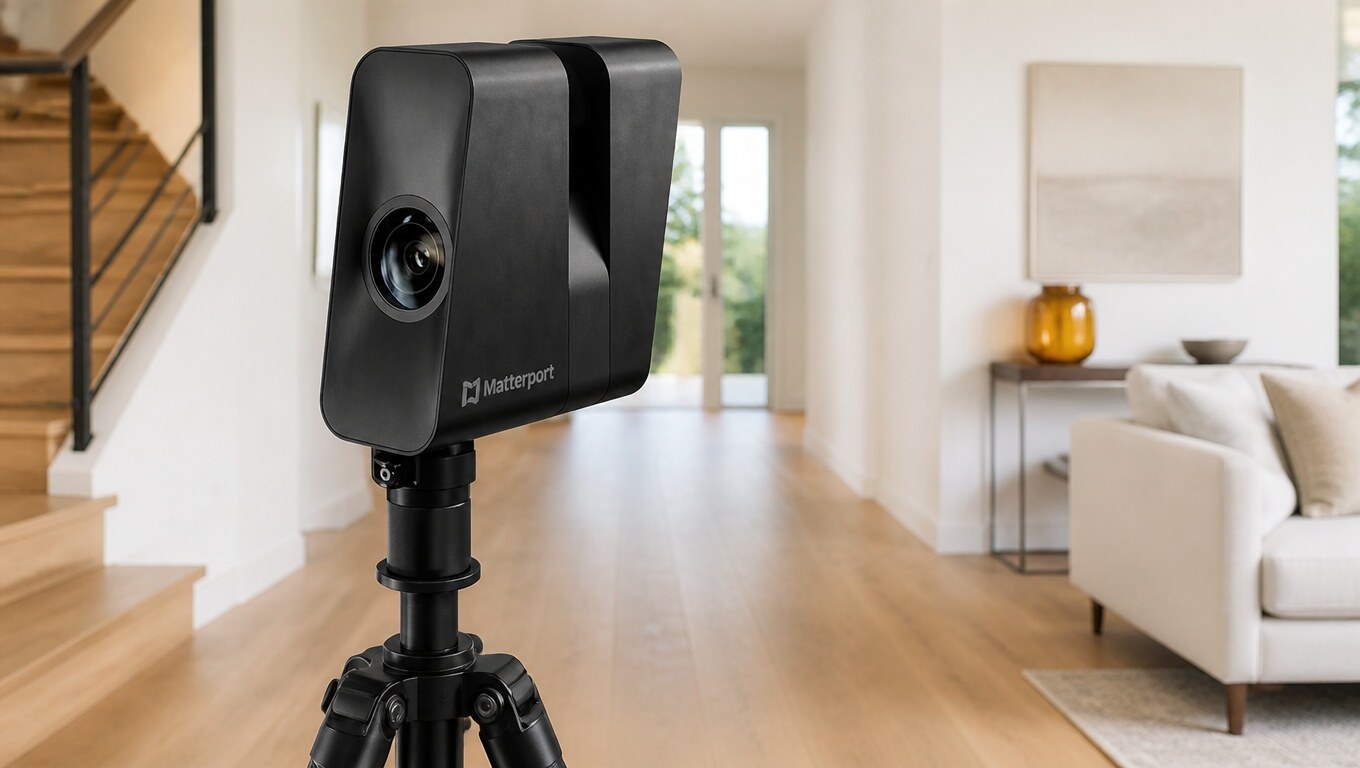
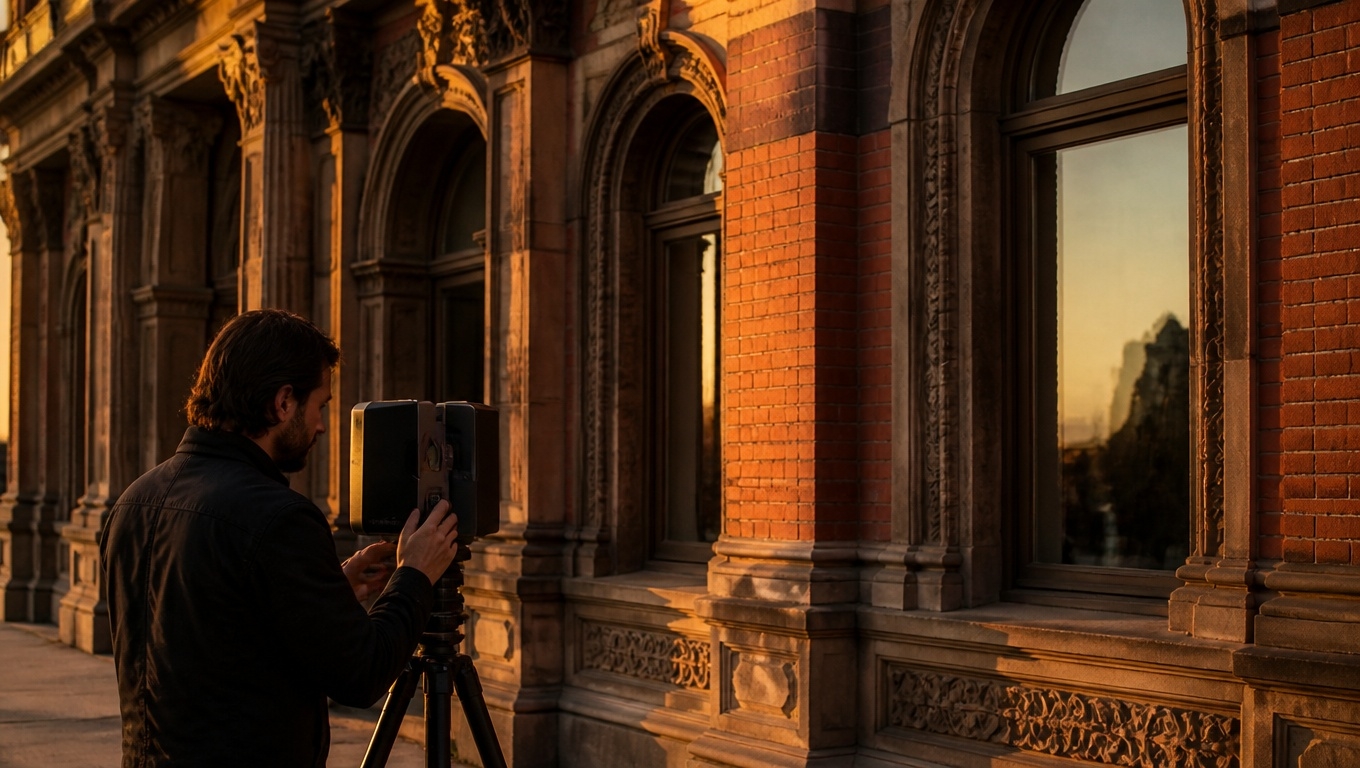
Matterport 3D tours answer those questions with the building itself. Invision Studio’s Matterport 3D tour photographers capture new builds at framing, rough-in, and finish with the Pro3 camera, giving your sales team a walkable record the same week — long before a model home exists.
Key takeaways
- Buyers commit to spaces, not plans. A tour turns a drawing into the walkthrough format buyers already use to decide.
- Pre-sales start earlier — a framing walkthrough can support reservations months before finishes go in.
- Upgrades get easier. Buyers who can see ceiling height, light, and proportions make fewer changes later.
- One capture, two jobs: it markets the home and becomes the documentation trail at handover.
- The Pro3 covers interior and exterior, so elevations, lot, and great room come from one session with consistent color.
Table of contents
Why is pre-construction the hardest thing to sell?
Because every other home a buyer considers can be visited. Resale has a driveway, a front door, and a smell. New construction has a lot, a brochure, and a promise — and the gap between those experiences is where deals slow down and contracts fall out.
Builders usually close that gap with better renderings. Renderings sell mood; they are poor at proportion. A buyer cannot measure one, look out of its window, or tell whether the hallway will feel tight. A 3D tour is the only pre-completion asset that answers proportion honestly, because it is generated from the structure rather than the design intent.
What a 3D tour shows that a render cannot
| Asset | Does well | Falls short |
|---|---|---|
| Render | Mood, materials, intent | Nothing is measurable |
| Floor plan | Layout and square footage | Requires spatial literacy buyers lack |
| Video walkthrough | Curated path and pacing | Passive — the camera chooses |
| Model home | Full sensory experience | Expensive, late, often a different plan |
| Matterport tour | Self-guided, measurable, date-stamped | Needs a structure to scan |
That last limitation is also the reason the tour is credible. Buyers have learned to discount renderings; a walkthrough of real framing reads as evidence.
How builders use tours at each stage
Plans and lot
Before framing, the scan documents the site: lot, setbacks, views, and sun exposure. Combined with the plan set, it pre-qualifies buyers who care about orientation — the ones who ask which side the primary suite faces.
Framing and rough-in
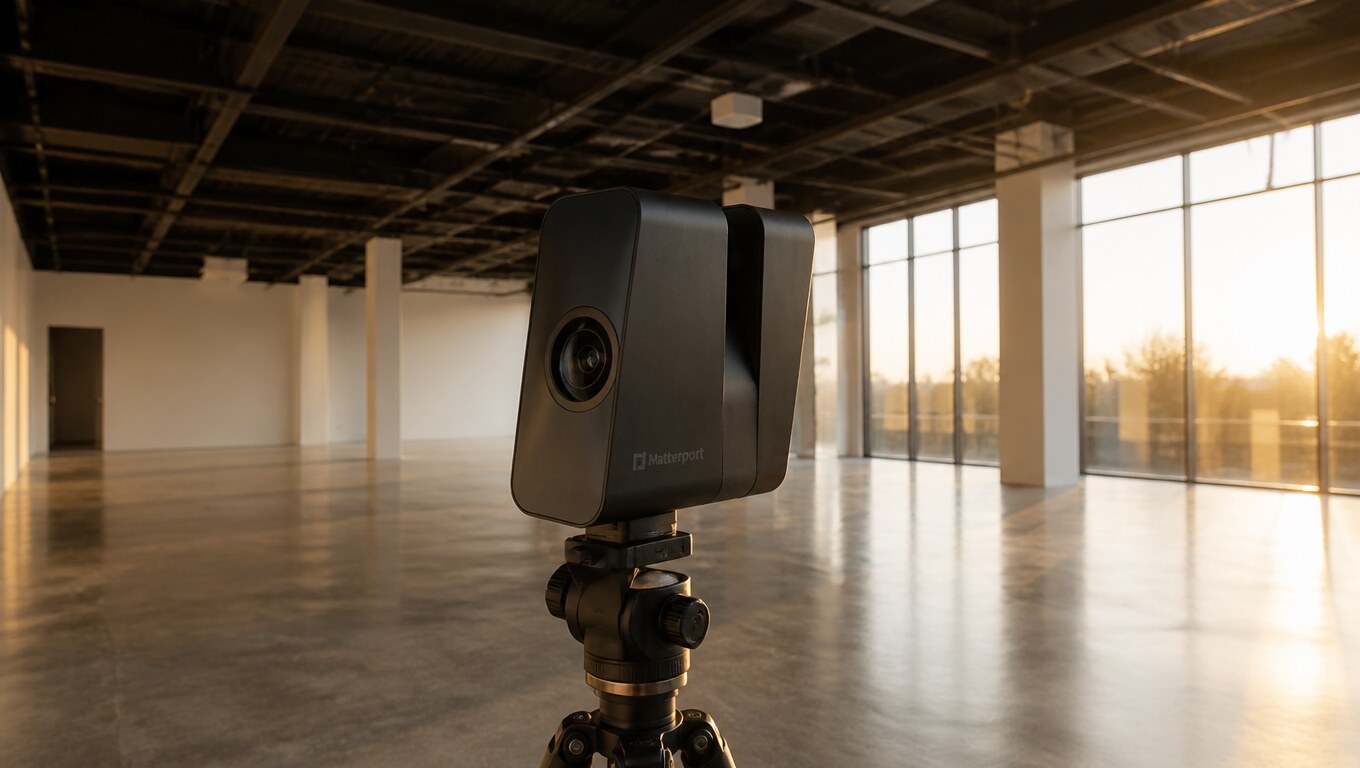
This is the highest-value pre-sale capture. Rooms exist at full volume, ceiling height is real, and window openings are cut. A buyer can stand in the future great room and understand what they are buying. Our Matterport 3D tour photographers recommend scanning at framing specifically for sales, not only for documentation, because it is the earliest point where a walkthrough is both truthful and legible to a non-builder.
Finish and turnover
The finished tour outlives the sale: it supports the listing, the appraisal packet, the closing walkthrough, and eventually the owner’s maintenance record.

Where the tour lives in the sales process
- Sales gallery: a large-format display lets buyers explore the plan they are considering, not just the model.
- Website and listings: embedded tours keep remote buyers on the page and give them a reason to inquire before traveling.
- Follow-up email: “Here is the framed walkthrough of the plan you liked” re-opens stalled conversations.
- Selections meetings: walking the rough-in tour while choosing finishes keeps decisions grounded in real dimensions.
- Contract packets: the tour link documents condition at the point of sale.
The buyer objections it answers
Most pre-sale objections are spatial, not financial. “I need to think about it” usually means “I cannot picture it.”
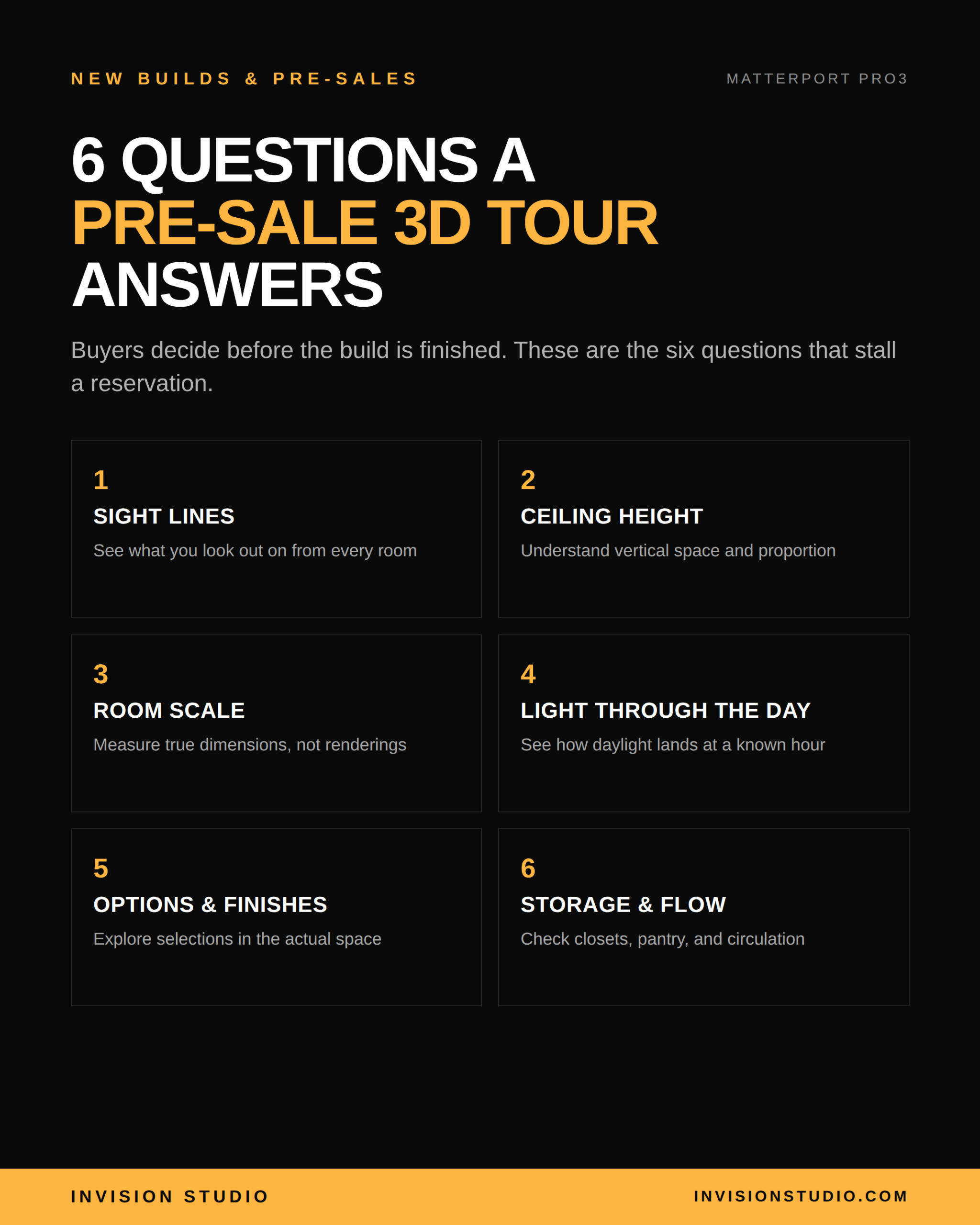
Light throughout the day is the question buyers ask and builders answer vaguely; a tour captured at a specific hour shows the truth. Storage and flow is where renderings routinely oversell — closets, pantries, and mudrooms are the rooms buyers test first, and the rooms a tour shows without flattery.
Appraisals, lenders, and investor packets
This is where marketing spend starts behaving like risk management. Appraisers work from plans and comparables, but a tour gives a clearer read on finish level and condition — particularly on custom homes where the spec sheet undersells the build. Lenders reviewing draw requests get the same benefit: a dated, walkable record of what was completed before funds are released.
Investors in out-of-state projects often cannot visit at all. A tour link is the difference between approving a draw on evidence and approving it on trust — and it feeds the closeout documentation your team needs later.
Put your next new build in front of buyers sooner
Invision Studio scans new construction with the Matterport Pro3 — framing, rough-in, and finish — and delivers marketing-ready tours your sales team can use the same week.
Frequently asked questions
Can we pre-sell from a 3D tour before the home is finished?
Many builders use a framing-stage tour to support reservations and keep buyers engaged through the build. It shows real volume, ceiling height, and window placement — more convincing than a rendering, though it does not replace contracts, deposits, or required disclosures.
How is a Matterport tour different from a video walkthrough?
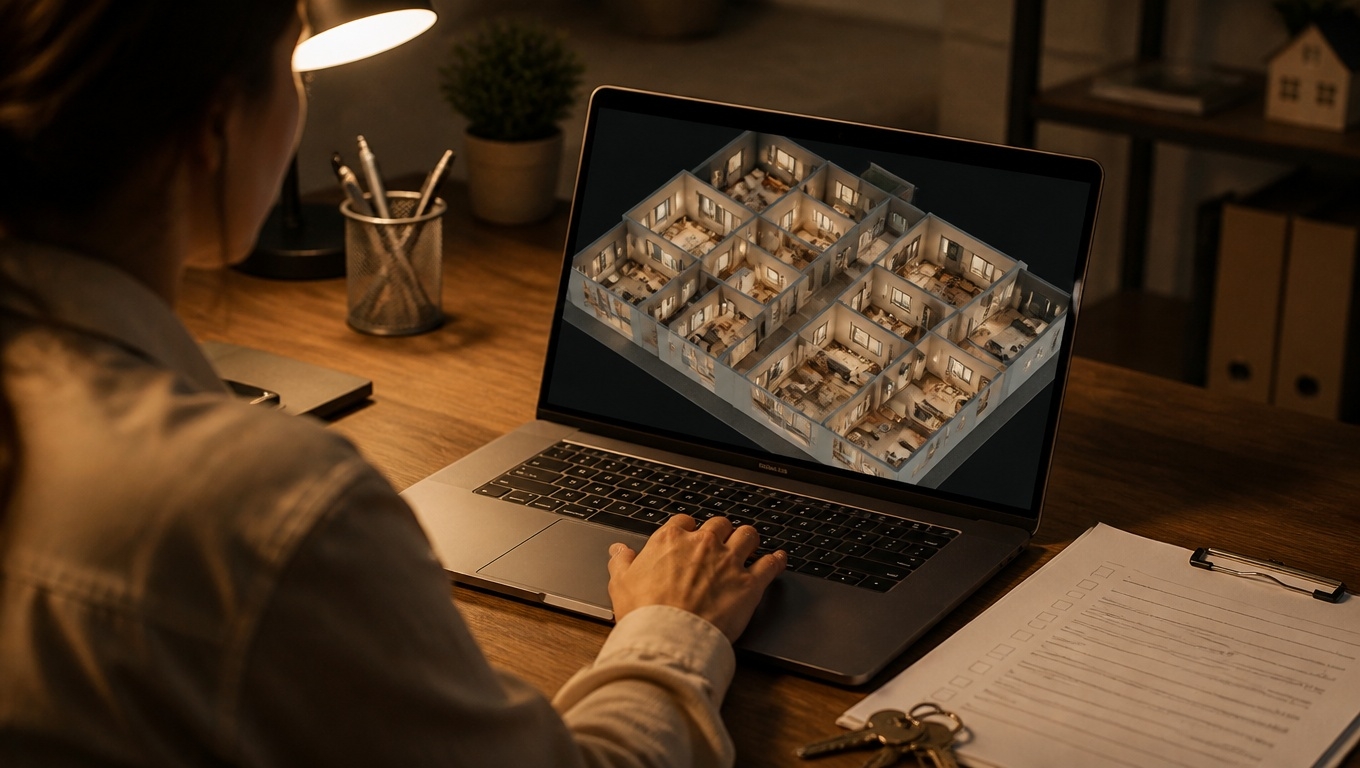
A video follows a fixed path at a fixed pace. A Matterport tour lets the buyer choose where to look, measure rooms, switch to dollhouse view, and revisit the link as often as they like — which is what makes it usable inside a live sales conversation.
Do we need a different camera for exterior shots?
No. The Pro3 captures interiors and large outdoor spaces, so elevations, lot, and rooms come from one session with consistent color and scale.
Can the tour be updated as the build progresses?
Yes. New captures merge into the existing project, so one link shows the home at framing, rough-in, and completion — and buyers can revisit it to see progress.
Related reading: pre-construction documentation · Matterport for builders · Matterport vs. 360 tours